

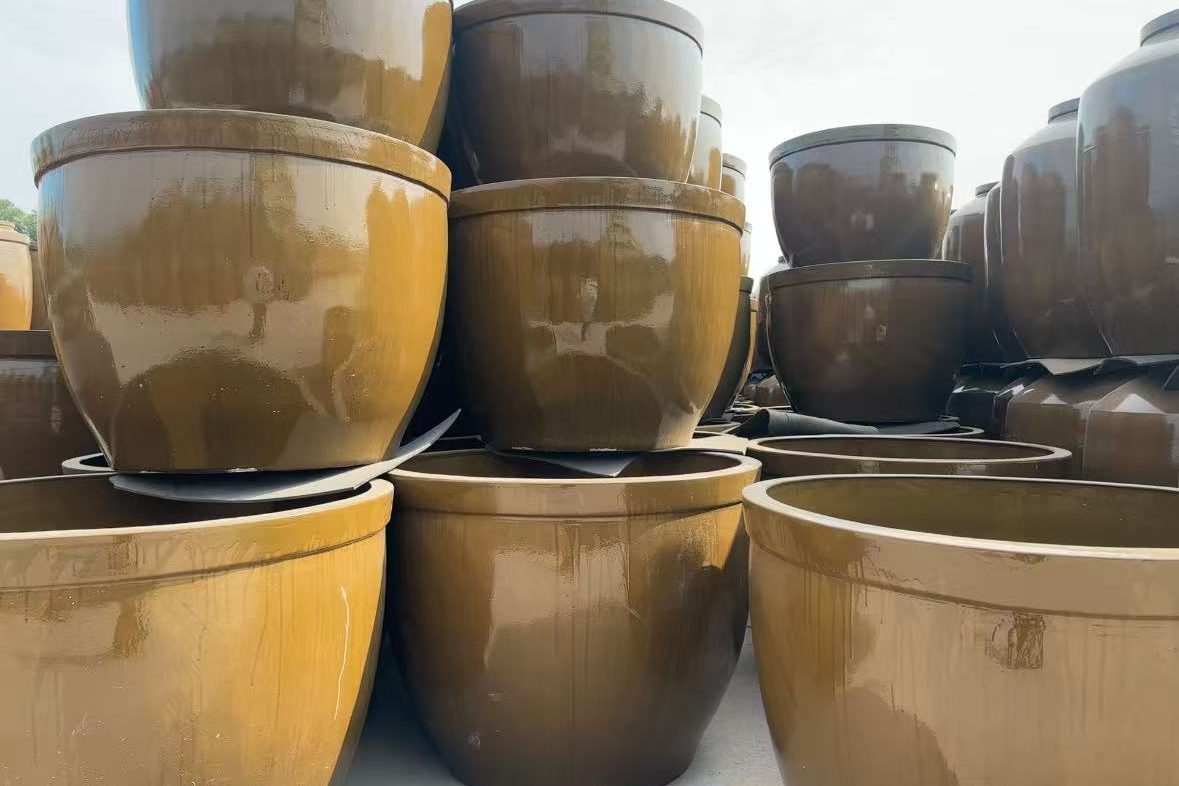
For food enthusiasts and followers of traditional handicrafts, clay fermentation jars are far more than simple containers for food fermentation; they carry the dietary wisdom passed down through generations. These clay vessels, used for fermenting kimchi, sauerkraut, fruit wine and other ingredients, have seen their production techniques refined over hundreds of years. Through the perfect integration of natural materials, exquisite craftsmanship and meticulous attention to detail, they have created fermented foods with unique flavors. If you have ever wondered how a piece of ordinary clay can transform into a tool capable of brewing authentic fermented flavors, the following will provide you with all the answers.
The selection of clay
Creating high-quality clay fermentation crocks begins with the selection of clay. Traditional artisans often choose clay rich in minerals. This type of clay not only has strong plasticity but also possesses a natural micro-porous structure, which is crucial for achieving respiratory fermentation, balancing the microbial community, and discharging gases.
The preparation of clay requires multiple refining processes: the raw clay is naturally air-dried, crushed, and sieved, undergoing step-by-step purification; then it is mixed with water, and occasionally fine sand or old pottery powder is added to enhance its toughness.
Kneading the clay is a core skill. Craftsmen, with their proficient techniques, repeatedly knead and rub the clay to eliminate all air bubbles and blend the water and soil evenly. High-quality clay is often left to settle and age for several months until its nature becomes mellow and its texture fine, thus forming a good foundation for making pottery.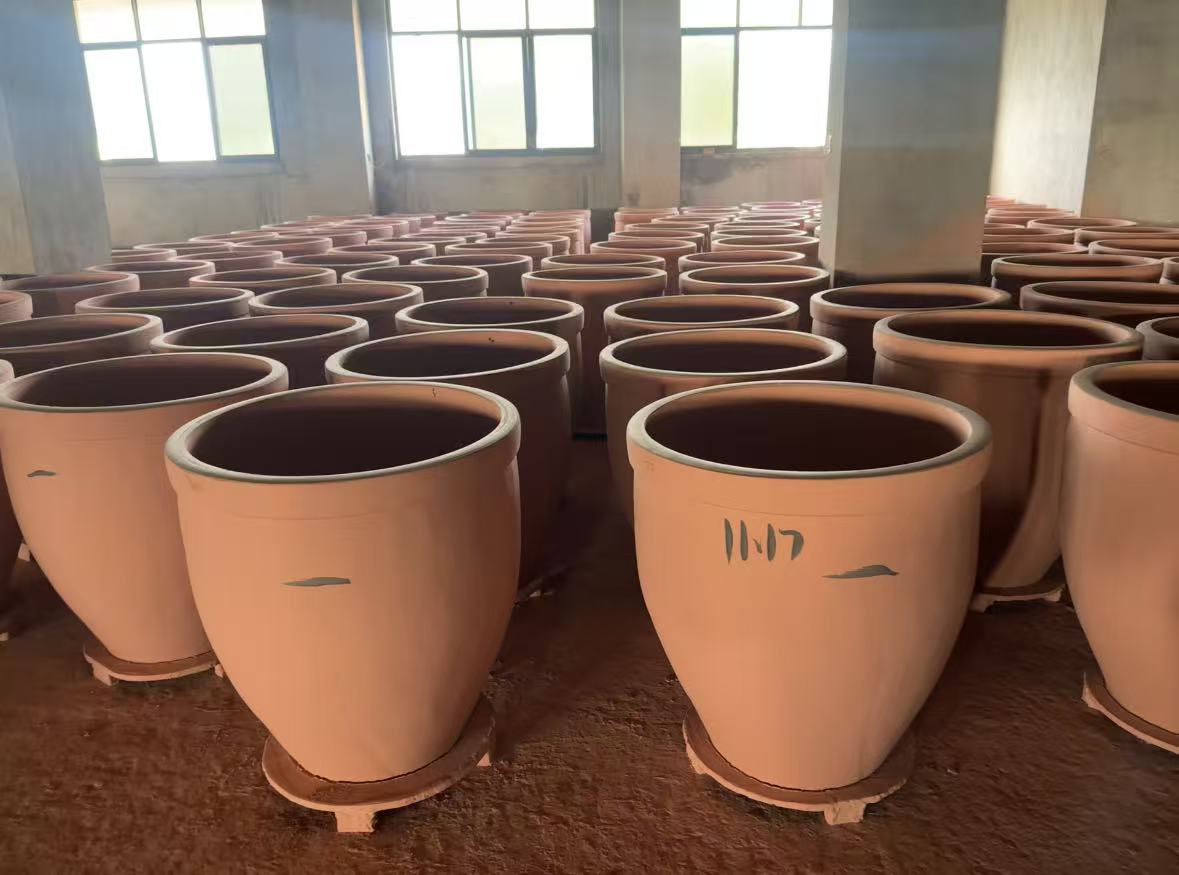
Fermentation crocks molding
The shaping process directly determines the capacity, wall thickness and sealing performance of the clay fermentation crocks – especially the water seal structure at the crocks opening, which is a key factor influencing the success or failure of fermentation. Nowadays, the shaping techniques for clay fermentation crocks mainly fall into two categories: traditional handcrafting and modern mold forming, each catering to different production requirements.
Traditional handcrafting: Experienced artisans use the potter’s wheel to shape the body, neck and mouth of the jar through techniques such as centering, pulling and pressing. The jar needs to be finely hand-polished to ensure it is smooth and flat. When making large-capacity fermentation jars, the artisans will divide the jar into sections and shape them on the wheel, then join the sections with water-based slurry and smooth the joints to ensure the jar is airtight and does not leak.
Modern mold production: To meet the demands of mass production, modern factories often use gypsum molds for shaping. After injecting clay slurry into the mold, a uniform clay layer is formed on the inner wall by taking advantage of the water-absorbing property of gypsum. Once it has partially hardened, the mold is removed to obtain a well-shaped pot blank. Additionally, by rotating the mold, the wall thickness is further evened out and residual air bubbles are expelled, ensuring that the pot body remains stable throughout the fermentation process.
Shaping and Drying
After the clay pickle jar is formed, it needs to be finely trimmed: the craftsman will use a scraper to smooth the jar mouth, rim or sealing groove, etc., to ensure that the interface is flat and the sealing structure is smooth; if a patterned fermentation jar is to be made, traditional patterns will be carved on the jar body at this stage with engraving tools; finally, the surface of the jar body is gently sanded with fine sandpaper to remove burrs, making the texture of the jar body more delicate and avoiding the residue of food during fermentation.
The moisture content of the newly formed raw body of the clay fermentation crocks can be as high as 20% to 25%, making it fragile and unsuitable for direct firing. Craftsmen will place the raw body in a cool, well-ventilated, and shaded environment to air dry naturally. The drying time usually ranges from 7 to 15 days, and the exact duration needs to be adjusted according to the environmental humidity and the thickness of the crocks. During the drying process, direct sunlight or high-temperature baking must be strictly avoided, as this would cause the outer layer of the crocks to dry much faster than the inner layer, leading to cracking and deformation.
High-temperature firing and cooling
Firing is the core process for shaping the clay fermentation crocks. Under the effect of high temperature, the clay undergoes physical and chemical changes, achieving hardening and shaping, and significantly enhancing its impermeability, corrosion resistance and durability. Usually, in a tunnel kiln, the temperature is raised at a rate of 50-80℃/h to remove the residual moisture and organic matter in the green body; then, it is fired at a constant temperature of 950-1050℃ for 8-12 hours, promoting the full sintering of clay particles and forming a stable and uniform microporous structure, which endows it with the dual functions of preventing leakage and allowing micro-permeability.
After firing, a slow cooling process is required: in traditional methods, the kiln is sealed and the fermentation crocks are allowed to cool naturally inside the kiln for 3 to 5 days; in modern factories, a staged cooling process is adopted, first gradually reducing the temperature to below 600℃, and then gradually decreasing the cooling rate to prevent sudden temperature drops from causing the crocks to crack. Slow cooling not only ensures the structural stability of the crocks but also allows the clay to retain an appropriate micro-porous structure, which meets the requirements for microbial balance and gas release during food fermentation.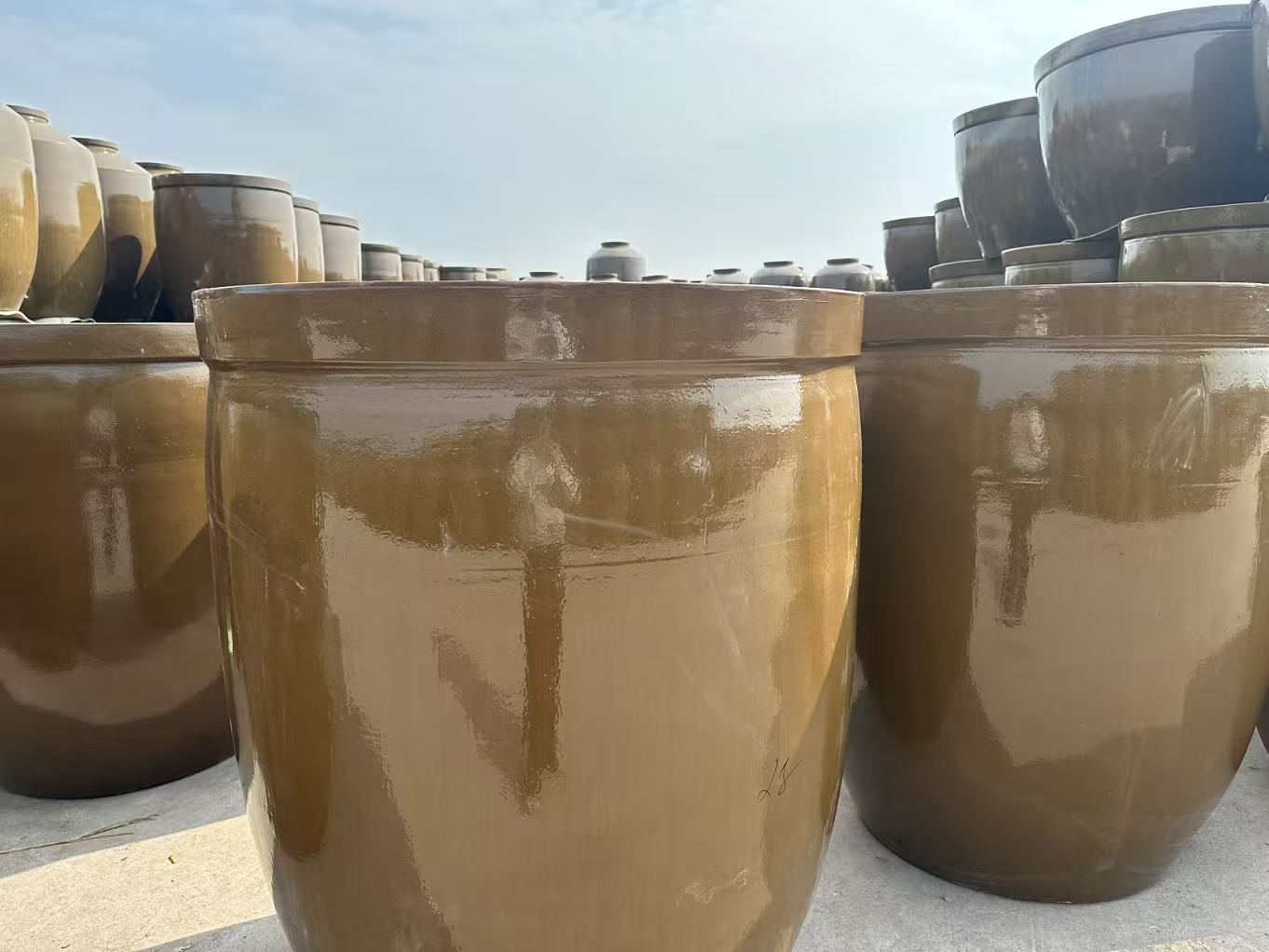
Finished product quality inspection
Before leaving the factory, the clay fermentation crocks must undergo strict inspection to ensure reliable sealing and safe use. The inspection mainly consists of three steps: First, the crocks body is illuminated with a light to check for any fine cracks on the inner and outer walls. Then, a small hammer is gently tapped on the crocks body; those that produce a clear sound are considered to have a dense structure and qualified firing, while those with a dull sound are discarded as they have internal defects. Finally, an immersion test is conducted by filling the crocks with water and sealing it, then leaving it undisturbed for 24 to 48 hours. Only those without leakage are deemed qualified.
FAQ
1.Why does a clay fermentation crocks need to be fired at high temperatures?
High-temperature firing is the key to the formation of a clay fermentation crocks. This process can not only thoroughly remove the moisture and impurities in the clay, making the crocks body structure dense, firm and durable, but also retain its natural micro-porous structure, achieving “micro-breathing” during fermentation: it can expel gases, balance the bacterial flora, and inhibit the growth of harmful bacteria, creating a stable environment for beneficial fermentation.
2.Can the logo or patterns be customized on the clay fermentation crocks?
Yes, it can be customized. The patterns, logos or words need to be customized during the greenware trimming stage. The artisans can carve or print the relevant marks on the crocks body according to the requirements, and then proceed with the subsequent firing. The patterns on the finished product will be integrated with the crocks body and are not easy to fall off.
3.How long does it take to make a clay fermentation crocks?
For a regular-sized clay fermentation crocks, it takes about 15 to 20 days from clay preparation to the finished product leaving the factory. If it is a custom-made special size by hand, due to the longer time required for aging, shaping and finishing, the production cycle is about 3 to 6 weeks.